

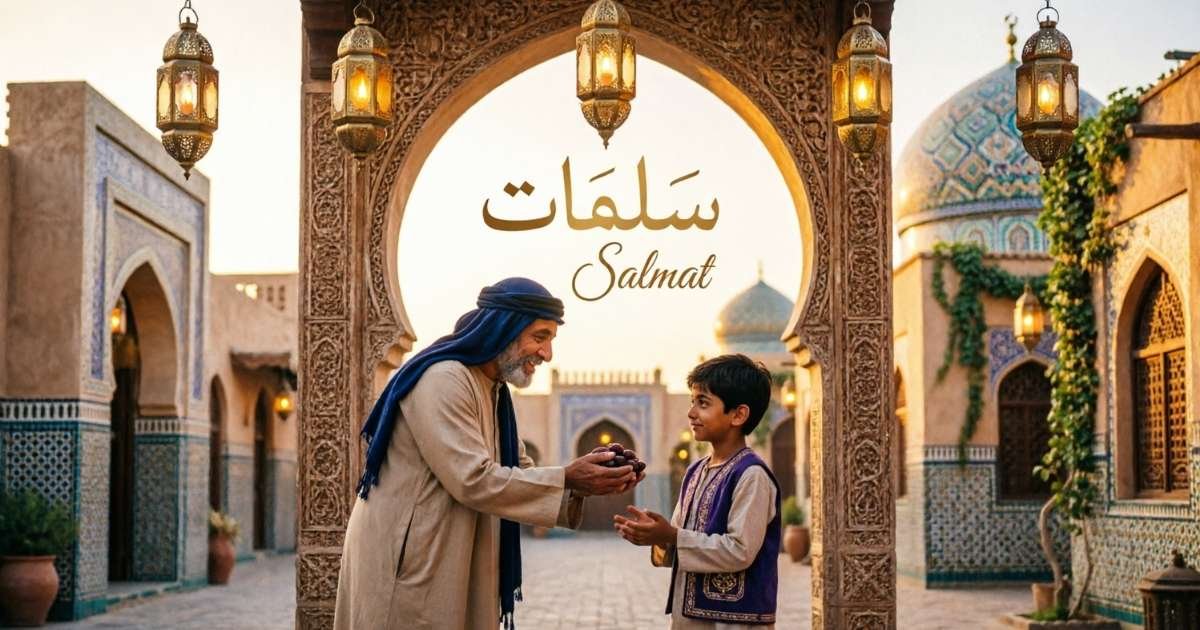
Have you ever heard someone say “Salamat” and wondered what the real Salamat meaning is or where it comes from? Maybe a friend said it to you, you caught it in a conversation, or you’re simply curious whether it carries a deeper meaning beyond just “thank you.” That feeling of wanting to understand a word that feels both familiar and foreign is something so many of us share.
In this post, we’re breaking down the full Salamat meaning including why it’s used across different cultures and languages, and yes, what it means as a Muslim word rooted in Arabic tradition. Whether you’re learning the language, connecting with a culture, or just satisfying your curiosity, you’re in the right place — keep reading and everything will make sense.
The Meaning of “Salamat” in Arabic
Salamat meaning comes from the Arabic root S-L-M. This root carries the idea of peace, safety, and well-being. It’s one of the most positive words in the Arabic language. Arabs use it to wish someone good health and protection.
You’ll hear it after someone recovers from illness or returns from a trip. It’s warm, genuine, and deeply cultural. Think of it as saying, “I’m glad you’re safe.”
Quick Summary Table: Salamat Meaning and Usage
Understanding salamat becomes much easier when you see it all in one place. Here’s a simple breakdown of everything you need to know at a glance.
| Feature | Details |
| Word | Salamat |
| Language Origin | Arabic |
| Core Meaning | Safety, peace, and well-being |
| Root Letters | S-L-M (س-ل-م) |
| Common Usage | Wishing someone good health or safe return |
| Religious Link | Connected to Islamic phrases and Quranic vocabulary |
| Related Words | Salam, Salama, Ma’a Salama, Islam, Muslim |
Linguistic Root and Grammatical Usage
Arabic is a language built on roots and once you understand them, everything clicks. The word salamat isn’t random. It grows from one of the most powerful root systems in the entire Arabic language. Understanding this root helps you see why the word carries so much meaning.
The three-letter root S-L-M (س-ل-م) is the foundation of salamat. From this single root, Arabic builds dozens of words all connected to the same beautiful idea of peace, safety, and wholeness.
Root Letters (S-L-M)
Think of S-L-M as a seed. From that one seed, an entire tree of meaning grows.
This root gives us salam (peace), Islam (submission to peace), Muslim (one who submits), and salamat (safety/well-being). They all share the same DNA. That’s the genius of Arabic one root, endless meaning. It’s like a family where every member carries the same last name but plays a different role.
Different Forms, Same Meaning
Salamat is the plural form of salama, which means safety or soundness. In Arabic grammar, this plural form adds warmth and fullness to the word.
When someone says Salamat meaning in its fullest sense — they’re not wishing you one small safety. They’re wishing you layers of it. It’s abundance. It’s like saying — May every part of you be well. That’s why it feels so rich and genuine when someone says it to you sincerely.
Everyday Usage
You don’t need a special occasion to use salamat. Arabs drop it naturally into daily conversations all the time.
Someone sneezes? Salamat. A friend recovers from a cold? Salamat. A family member comes home after a long journey? Salamat. It flows effortlessly because it genuinely expresses care. It’s one of those words that fills a gap no single English word can. “Get well soon,” “stay safe,” and “glad you’re okay” salamat covers all three.
Cultural and Religious Connection
In Islamic culture, safety and peace aren’t just physical concepts. They’re blessings from God. So when a Muslim says salamat, there’s a quiet prayer hidden inside it. It reflects the Islamic belief that well-being comes from a higher source.
This gives the Salamat meaning a layer of sincerity that goes far beyond small talk. It connects language, faith, and human care in one breath — and that’s what makes it truly special.
Grammatical Flexibility
One thing that makes salamat so useful is how flexible it is grammatically.
You can use it as a noun, a greeting, a response, or even an exclamation. It fits naturally into sentences without feeling forced. For example:
- As a greeting: Salamat alayk “Safety be upon you”
- As a response: Someone thanks you, you reply salamat meaning “be well”
- As a well-wish: After illness or travel, it works perfectly as a standalone expression
This flexibility is rare. Most words stay in one lane. Salamat moves freely and that’s exactly why native speakers reach for it so often.
The more you explore salamat, the more you realize it’s not just vocabulary. It’s a window into how Arabic speakers think, feel, and connect with each other and with their faith.
Grammar Breakdown Table
Arabic grammar might seem complex at first but salamat is actually a great starting point. This table breaks down exactly how the word works grammatically in simple terms.
| Grammar Feature | Explanation |
| Word Type | Noun (can also function as an exclamation) |
| Singular Form | Salama — meaning one instance of safety |
| Plural Form | Salamat — expressing abundance of well-being |
| Root Pattern | Derived from three-letter root S-L-M |
| Gender | Feminine noun in Arabic grammar |
| Sentence Position | Works as subject, greeting, or standalone response |
| Verb Connection | Links to the verb salima — meaning “to be safe” |
Read More:Tristan Meaning in Bible: Spiritual Symbolism & Verse
Salamat Meaning in Daily Life
The salamat meaning shows up in real conversations more often than most people realize. It’s a natural part of how Arabic speakers express care, concern, and connection every single day.
In Arab culture, words of well-being aren’t saved for special occasions. People use them freely with family, friends, neighbors, and even strangers. Salamat fits into this culture perfectly because it feels warm without being overly formal. It bridges the gap between a simple greeting and a genuine human moment.
The way people use salamat may vary depending on the situation:
- After illness or injury: When someone recovers from sickness or gets hurt, salamat is the first word people reach for. It’s the Arabic equivalent of saying “glad you’re okay” but with more emotional depth and sincerity behind it.
- After a long journey: Returning home safely is a big deal in Arab culture. Saying salamat to a traveler who just arrived expresses genuine relief and happiness. It acknowledges that their safe return is something worth celebrating.
- During difficult times: When someone faces stress, hardship, or emotional pain, salamat works as a word of comfort. It tells the person that others care about their peace of mind not just their physical health.
- In casual everyday conversation: Sometimes salamat is used lightly and warmly almost like saying “take care” at the end of a chat. It keeps the tone friendly and leaves people feeling genuinely valued.
- A limitation worth noting: Non-native speakers sometimes use salamat in the wrong context for example, as a direct “thank you.” While understandable, this can cause mild confusion since salamat is specifically about safety and well-being, not gratitude.
How to Use Salamat in Conversations
Knowing the salamat meaning is one thing but using it correctly in real conversations is where it truly comes to life. With the right context and timing, this word can make your Arabic sound natural and genuinely warm.
Arabic speakers value expressive language. They appreciate when someone uses words that carry emotional weight rather than generic phrases. Salamat fits naturally into many everyday exchanges but only when used in the right moment and with the right intention behind it.
The correct way to use salamat may vary depending on the situation:
- As a response to someone sneezing: In Arab culture, when someone sneezes, saying salamat is the polite and expected response. It’s similar to saying “bless you” in English. It shows basic social awareness and cultural respect in one simple word.
- When someone returns from travel: Greeting a returning traveler with salamat feels completely natural in Arabic conversation. It communicates relief and happiness at their safe arrival. Native speakers use it instinctively in this context without even thinking about it.
- After hearing about an accident or health issue: If a friend mentions they had a fall, surgery, or illness, responding with salamat shows empathy immediately. It doesn’t require a long response. Sometimes one sincere word carries more weight than an entire paragraph of sympathy.
- As a standalone farewell blessing: In some Arabic-speaking communities, salamat is used as a warm goodbye wishing the other person safety on their way. It works similarly to saying “take care” but with deeper cultural and linguistic roots behind it.
- A common mistake to avoid: Don’t use salamat as a direct substitute for “thank you.” That’s a frequent error among non-native speakers. Salamat is specifically about wishing safety and well-being not expressing gratitude. Mixing the two up can cause awkward misunderstandings in real conversations.
Examples of “Salamat” in Arabic Sentences
Seeing salamat meaning in real sentences makes it far easier to understand and remember. Practical examples show you exactly how native Arabic speakers use this word in everyday life.
Arabic is a contextual language. The same word can feel different depending on who says it, when they say it, and what situation surrounds it. Looking at real sentence examples helps learners move beyond memorization and into actual understanding which is where language learning gets genuinely useful.
The usage and tone of salamat may vary depending on the situation:
- After someone sneezes: “Salamat” , said immediately after a sneeze. Translation: “Be well” or “Bless you.” This is the most common and automatic use of the word in daily Arabic conversation.
- Welcoming someone home from a journey: “Salamat ala al-wusool” , said to a returning traveler. Translation: “Welcome back safely.” It expresses genuine relief and happiness that the person arrived without harm.
- Responding to news of illness: “Salamat, inshallah tithassan bisur’a” , said to someone who is unwell. Translation: “Be well, I hope you recover soon.” Here salamat opens the well-wish and sets a warm, caring tone for the whole sentence.
- As a farewell blessing: “Ruh bisalama” said when someone is leaving. Translation: “Go in safety” or “Travel safely.” This phrase comes directly from the same S-L-M root and reflects the same core meaning as salamat.
- A note for learners: Reading these examples in transliteration is helpful at first. However, learning even basic Arabic script alongside these sentences gives you a much stronger grasp of how salamat fits into the broader Arabic language system.
How “Salamat” Differs from “Salam”
Both words come from the same root but they work differently. Salam means peace and works as a greeting — like saying hello. Salamat meaning covers safety and well-being and is used to wish someone good health. One opens a conversation while the other expresses genuine care for someone’s condition.
Think of salam as a door and salamat as a warm hand on the shoulder. They’re related but serve different emotional purposes. Knowing the difference helps you use both words correctly and makes your Arabic sound natural and thoughtful.
Salamat Meaning in Quranic Context

The Quran uses words from the S-L-M root repeatedly. Peace, safety, and wholeness are central themes throughout the holy text. Salamat and its related forms appear in verses describing Paradise, divine protection, and God’s blessings. This gives the word a spiritual weight that goes far beyond everyday conversation.
One beautiful example is “Dar al-Salam” , the Home of Peace used in the Quran to describe Paradise. This shows how deeply the concept of salamat is woven into Islamic theology. When Muslims use this word daily, they’re unknowingly echoing sacred Quranic language.
Tips for Using Salamat Correctly in Arabic
Using salamat correctly takes just a little awareness. These simple tips will help you sound natural and respectful every time you use it in Arabic conversation.
- Use salamat after someone sneezes it’s the most natural and expected response in Arab social settings
- Say it when greeting someone who just returned from a long trip or difficult journey
- Use it sincerely when someone shares news about illness, injury, or a tough personal experience
- Avoid using salamat as a replacement for “thank you” it expresses well-being, not gratitude
- Pair it with inshallah in sentences when wishing someone a full and speedy recovery
- Learn the related phrase ma’a salama separately it means “go in peace” and works as a farewell
- Keep your tone warm and genuine when saying it Arabic speakers value sincerity over perfect pronunciation
Cultural or Quranic Significance of “Salamat”
Some words do more than communicate they carry history, faith, and human warmth all at once. Salamat is one of those words. In Arabic and Islamic culture, it isn’t just something you say casually. It reflects a worldview where peace, safety, and well-being are sacred values worth expressing out loud. Once you understand the true Salamat meaning, you’ll never hear it the same way again.
This word connects everyday human interaction with something much bigger a shared cultural and spiritual belief that wishing someone well is an act of genuine faith and care.
Expression of Safety and Peace
Salamat is essentially a spoken blessing. When someone says it, they’re expressing a hope that you’re physically safe, emotionally at peace, and spiritually protected.
In Arabic culture, safety isn’t taken for granted. It’s something you actively wish upon others. That’s why Salamat meaning carries such emotional weight. It’s not filler — it’s feeling. Imagine your grandmother looking you in the eyes after you return from a long trip and saying “Salamat.” That one word holds relief, love, and gratitude all at once. No English phrase quite captures that.
Embedded in Islamic Etiquette
Islam places enormous value on the way Muslims speak to and treat each other. Greetings, well-wishes, and expressions of care are all considered acts of worship when done sincerely.
Salamat meaning fits perfectly into this etiquette. It’s used when someone is sick, when they’ve faced hardship, or when they’ve safely completed a journey. In Islamic tradition, acknowledging someone’s well-being out loud is a form of dua — a prayer. So saying salamat isn’t just polite. It’s considered spiritually rewarding. That’s a beautiful idea — that kindness in language is also kindness to God.
Used in Prayers and Blessings
The word salama and its forms show up in duas asking God for protection, health, and safe travels. Muslims say “Allahuma salimna” meaning “O God, keep us safe.” The root is the same.
This shows that Salamat meaning isn’t just cultural small talk. It’s language borrowed directly from the vocabulary of prayer. When you use it, you’re speaking in the same tone as centuries of Islamic tradition before you.
Cultural Reflection of Care
Salamat meaning shines clearly here. You’ll hear it between strangers, neighbors, colleagues, and family members equally. It doesn’t matter how close you are. If someone went through something difficult an illness, an accident, a stressful event salamat is the natural, instinctive response. It says I see you. I care. I’m glad you’re okay. That kind of emotional generosity is deeply woven into Arab identity.
Connection to the Root S-L-M
Everything circles back to the root S-L-M and that’s not a coincidence. This root is arguably the most spiritually significant in the entire Arabic language.
It gives us Islam, Muslim, salam, salama, and salamat all pointing toward the same core idea: wholeness, peace, and submission to what is good. The Quran itself uses words from this root dozens of times. “Dar al-Salam” the Home of Peace is one of the names for Paradise in the Quran. So when someone wishes you salamat, they’re unknowingly echoing one of the highest concepts in Islamic theology. That’s the quiet power of this word.
Salamat is proof that language can be both simple and profound. It takes seconds to say but carries centuries of meaning. Whether you’re using it as a greeting, a prayer, or a cultural gesture know that you’re tapping into something genuinely beautiful.
Read More:Colton Name Meaning in English with Origin & Symbolism
Common Misunderstandings or Mistakes
Even well-meaning learners misuse salamat sometimes. Understanding these common mistakes helps you use the word correctly and avoid awkward moments in real Arabic conversations.
Because salamat appears in multiple languages with different meanings, confusion is surprisingly common. Filipino speakers use salamat to mean “thank you.” Arabic speakers use it to mean safety and well-being. These two meanings are completely different. Without knowing this distinction, learners can easily use the word in the wrong context and send an unintended message.
The misunderstanding may vary depending on the situation:
- Confusing salamat with “thank you”: This is the most frequent mistake among non-native speakers. In Tagalog, salamat means gratitude. In Arabic, it means safety and well-being. Using it as “thank you” in an Arabic conversation will confuse native speakers immediately.
- Mixing up salamat and salam: Many beginners treat these words as interchangeable. They aren’t. Salam is a greeting meaning peace. Salamat is a wish for someone’s safety and health. Using salam when you mean salamat changes the entire meaning of what you’re trying to express.
- Using it as a general compliment: Some learners say salamat randomly to sound friendly or knowledgeable. However native speakers use it only in specific situations after illness, injury, sneezing, or safe return from travel. Using it out of context can feel strange or insincere.
- Mispronouncing the word: Stressing the wrong syllable changes how natural the word sounds. The correct pronunciation is sa-LA-mat with emphasis on the second syllable. Mispronunciation doesn’t cause serious confusion but it does affect how fluent and confident you sound.
- Assuming it has religious exclusivity: Some people think salamat is strictly an Islamic or religious phrase. In reality it’s a broad cultural expression used by Arabic speakers of all backgrounds. Treating it as exclusively religious can cause unnecessary hesitation in casual everyday conversations.
Why You Should Learn “Salamat”
Learning salamat gives you more than just a new word. It gives you a genuine connection to Arabic culture, Islamic values, and real human expression. It’s one of those words that feels meaningful the moment you use it. Even non-native speakers find it surprisingly easy to remember and apply naturally.
This word also opens doors. Once you understand the salamat meaning, you start recognizing related Arabic words effortlessly. It builds your vocabulary, sharpens your cultural awareness, and makes conversations feel warmer and more authentic. For anyone learning Arabic or connecting with Muslim communities, salamat is honestly one of the best words to start with.
Shows Respect and Warmth
Words carry energy and salamat carries warmth like few other Arabic expressions do. When you use it correctly, people notice. It shows you’ve taken time to understand their language and culture. That kind of effort communicates genuine respect without saying anything extra.
Arab and Muslim communities deeply value expressions of care and well-being. Saying salamat in the right moment feels personal and sincere. It tells someone you actually care about their safety and health. That simple gesture builds trust, strengthens relationships, and leaves a lasting positive impression on everyone around you.
Builds Cultural Understanding

Learning one word can genuinely change how you see an entire culture. That might sound like an exaggeration but with salamat, it’s true. This single Arabic word opens a door into how Arab and Muslim communities think, connect, and express care for one another. It’s not just vocabulary. It’s a cultural key.
When you understand the salamat meaning fully, you don’t just learn a word. You learn a value system. You start to see how language and culture are inseparable and how knowing even a little Arabic can build real human bridges.
Shows Respect for Traditions
Every culture has words that carry tradition inside them. Salamat meaning is one of those words in Arabic.
Using it correctly shows that you’ve taken time to understand something meaningful. Arab and Muslim communities notice that. It signals respect not just for the language but for the people who grew up with it. Think of it like learning to bow slightly when greeting someone in Japan. You don’t have to do it. But when you do, it communicates something words alone can’t. It says, “I see your culture and I honor it.” That kind of gesture builds trust faster than almost anything else.
Connects You to Social Etiquette
Arabic social etiquette runs deep. Greetings, well-wishes, and expressions of care aren’t just nice habits they’re expected and meaningful.
Knowing when and how to say salamat puts you in sync with that etiquette naturally. If a colleague mentions they’ve been unwell and you respond with a warm salamat that lands differently than a generic “hope you feel better.” It shows cultural awareness. It shows you’re present. In Arab social settings, this kind of attentiveness is genuinely valued. You move from being an outsider to someone who gets it and that shift matters enormously in building real relationships.
Enhances Communication
Learning Salamat meaning makes you more thoughtful about what words mean and why people use them. You start listening differently. You pick up on emotional nuance more easily. Language learners who focus on culturally rich words often connect with native speakers faster than those who only memorize grammar rules.
Salamat is a perfect example of a word that teaches you not just Arabic — but how Arabic speakers experience the world. That’s communication at its deepest level.
Promotes Cultural Sensitivity
Cultural sensitivity isn’t about walking on eggshells. It’s about genuine curiosity and awareness.
Learning the salamat meaning especially its Islamic and Quranic roots helps you approach Arab and Muslim culture without assumptions. You understand that safety and peace aren’t just casual topics. They’re spiritual values. This awareness naturally makes you more thoughtful in conversations, more careful with generalizations, and more open to learning. In today’s world, that kind of sensitivity isn’t just polite it’s genuinely powerful. It reduces misunderstanding and builds real empathy between people of different backgrounds.
Deepens Appreciation of Language
Once you understand how salamat connects to salam, Islam, Muslim, and even Quranic vocabulary something clicks. You start to see language not as a list of translations but as a living system of meaning. Arabic especially rewards this kind of curiosity. Every root tells a story and every word connects to something larger.
Salamat is a perfect entry point into that world. It’s simple enough to remember but rich enough to teach you something new every time you use it. That’s the magic of digging deeper into words you end up appreciating not just one language but the very idea of human expression itself.
Understanding Salamat meaning is genuinely a small step with a big payoff. It builds respect, sharpens communication, and connects you to a rich cultural and spiritual tradition. One word — but it quietly teaches you how to be a more aware, more empathetic, and more curious human being.
Expands Vocabulary
Learning the salamat meaning doesn’t stop at one word it pulls you into a wider world of Arabic vocabulary, expressions, and linguistic patterns worth exploring.
Arabic is a root-based language. One root can generate dozens of connected words. So when you learn salamat, you’re not just adding a single term to your knowledge. You’re stepping into an entire system of meaning built around peace, safety, and well-being.
The value of learning this word may vary depending on the situation:
- For language learners: Understanding salamat introduces the S-L-M root family naturally. Words like salam, salama, and ma’a salama all become easier to recognize and remember. You build vocabulary faster because the words are connected not isolated.
- For cultural learners: Knowing Arabic expressions like salamat helps you understand Islamic phrases, Quranic vocabulary, and common Arabic greetings more deeply. It gives everyday words a richer context that textbooks often miss.
- For multilingual speakers: The word salamat also exists in Filipino/Tagalog as a way to say “thank you” a direct trace of Arabic influence through centuries of trade and Islamic cultural exchange. Recognizing these cross-language connections makes vocabulary growth feel natural and rewarding.
- For communication purposes: Using culturally accurate Arabic words builds credibility and trust in conversations with native speakers. It shows genuine effort and awareness something that goes beyond basic translation.
- A potential challenge: Without understanding Arabic root patterns first, some learners find it difficult to connect related words independently. A little foundational knowledge of Arabic linguistics makes the process significantly smoother.
Frequently Asked questions
Can you use Salamat Meaning during illness?
Yes, absolutely. Salamat meaning covers well-being and recovery, so saying it to someone who is sick is completely natural and genuinely caring in Arabic culture.
What is the difference between Salam and Salamat Meaning?
Salam means peace and works as a greeting. Salamat meaning focuses on safety and well-being, making it a heartfelt wish rather than a simple hello.
When should you say Salamat Meaning?
Use Salamat meaning after someone sneezes, recovers from illness, or returns from travel. It fits any moment where you genuinely want to wish someone safety and good health.
Does Salamat Meaning have spiritual significance?
Yes, it does. Salamat meaning connects directly to Quranic vocabulary and Islamic values, making it a word that carries both cultural warmth and quiet spiritual depth.
How do you pronounce Salamat Meaning correctly?
Pronounce it as sa-LA-mat, stressing the second syllable. Once you say Salamat meaning a few times naturally, it feels comfortable and flows easily in real conversation.
Conclusion
The salamat meaning is truly beautiful. It’s more than just a word it’s a feeling. It carries peace, safety, and genuine human care all in one expression. Whether you use it after someone sneezes or when a loved one returns home safely, salamat always feels warm and sincere. It’s a salamat in Muslim word tradition that reflects deep Islamic values of well-being and compassion.
Understanding salamat meaning connects you to Arabic culture, Quranic vocabulary, and everyday human kindness. It expands your vocabulary naturally. It builds real cultural awareness. . Once you truly grasp the salamat meaning, you’ll find yourself reaching for it often. It’s simple, powerful, and deeply human. Start using it today and feel the difference it makes.
