

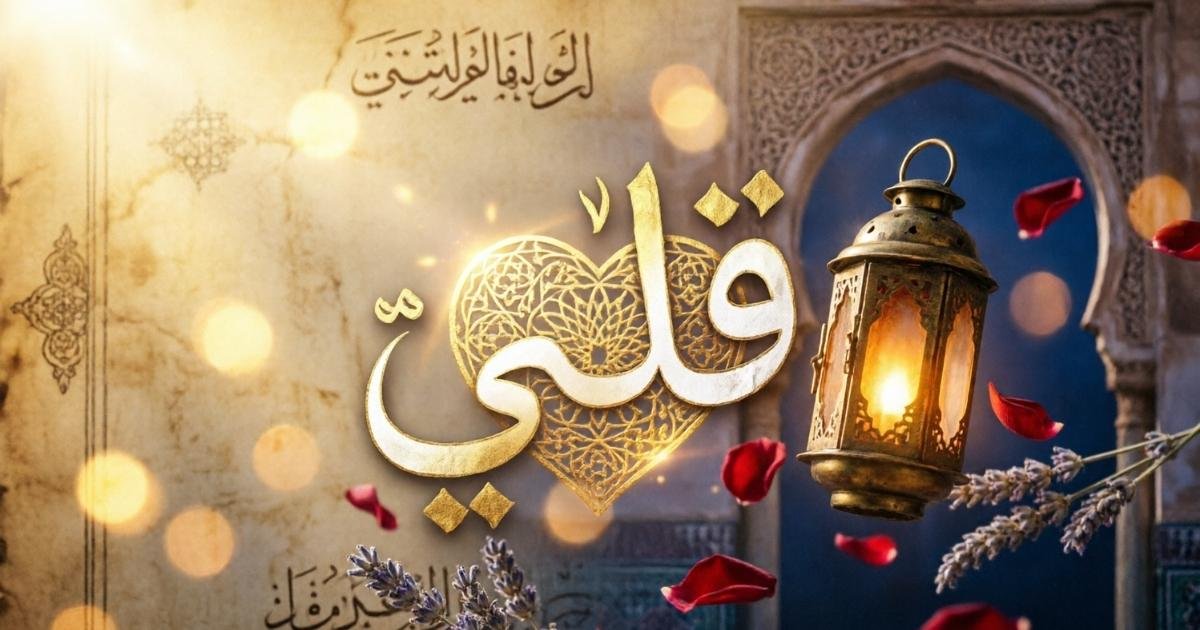
Sometimes people come across the word Qalbi Meaning in a message, dua, nasheed, or Arabic quote and feel curious about what it truly means. It sounds soft, emotional, and deeply connected to the heart, but many people are not sure of its exact meaning or how it is used in daily life.
In this blog, you will understand the real Qalbi Meaning in simple words and why this beautiful word carries so much emotional value. We will explain its Arabic root, common usage, and how people use it in love, faith, and heartfelt expressions so you can connect with its true depth.
Linguistic Root and Grammatical Usage

The word “Qalbi” comes from the Arabic root “Qalb,” which means heart. In Arabic grammar, adding the letter “i” at the end changes the meaning to “my heart.” So, “Qalbi” directly means “my heart.” People use it in daily speech to show love, emotion, and a strong personal connection.
In Arabic culture, “Qalbi” is more than just a word. It expresses deep affection between friends, family, or lovers. The word feels warm, soft, and emotional when spoken. Many learners search for Qalbi Meaning in Arabic to understand its use in love, care, and everyday emotional conversations.
Root Meaning:
The root meaning of “Qalbi” comes from the Arabic word “Qalb,” which means heart. In Arabic, the heart is seen as the center of emotions and feelings. When the word changes to “Qalbi,” it means “my heart.” It shows a personal and emotional connection in a simple and natural way.
This root carries deep emotional value in Arabic language and culture. People use it to express love, care, and closeness. It is not just a physical heart. It also represents feelings, emotions, and inner thoughts. That is why “Qalbi” feels so warm and meaningful in daily conversation.
Possessive Form:
The possessive form of “Qalbi” comes from adding “-i” to the word “Qalb,” which means heart. In Arabic grammar, this shows ownership. So, “Qalbi” means “my heart.” It is a simple structure that changes the meaning and makes it personal. People use it in emotional and loving expressions.
This form is very common in Arabic speech. It helps show closeness and personal feelings. When someone says “Qalbi,” they are not just talking about a heart. They are expressing something deeply personal. It reflects affection, care, and emotional attachment in everyday communication.
Grammatical Flexibility:
“Qalbi” has simple grammatical flexibility in Arabic. It can stand alone or appear in different phrases. The word adjusts easily in speech without changing its emotional meaning. People use it in both casual and emotional contexts. It keeps its meaning clear as “my heart” in most situations.
This flexibility makes “Qalbi” very common in daily Arabic. It can be used with names, greetings, or expressions of love. The word fits naturally in sentences without complex rules. Because of this, learners find it easy to use and understand in real conversations.
Cultural Depth:
“Qalbi” carries strong cultural meaning in Arabic life. It is not just a word for heart. It represents love, respect, and deep emotional bonding. People often use it in everyday talk. It shows how important feelings and emotions are in Arabic communication and relationships between people.
In Arabic culture, “Qalbi” is used with family, friends, and loved ones. It builds a warm emotional connection in speech. The word feels soft, kind, and caring when spoken. It is widely understood across Arabic-speaking regions. It reflects how language can express human emotions and strengthen social bonds.
Linguistic Insight:
“Qalbi” shows how Arabic language connects grammar with emotion. It comes from “Qalb,” which means heart, and becomes personal with “-i” meaning “my.” This small change gives the word a deeper emotional tone. It is simple, but very powerful in meaning and use.
From a linguistic view, “Qalbi” is widely used in spoken Arabic. It fits easily in daily conversations without complex rules. The word shows how Arabic blends structure with feeling. It helps learners understand how language can express both meaning and emotion at the same time.
Examples of “Qalbi” in Arabic Sentences
“Qalbi” is often used in simple Arabic sentences to show love and emotion. People include it in daily talk to express feelings in a warm and natural way.
| Situation | Arabic Example Use | English Meaning |
| Love talk | You are my Qalbi | You are my heart |
| Greeting | Good morning, Qalbi | Good morning, my love |
| Family | My Qalbi is happy | My heart is happy |
| Friendship | Stay safe, Qalbi | Stay safe, my dear |
| Romance | I miss you, Qalbi | I miss you, my heart |
| Comfort | Don’t worry, Qalbi | Don’t worry, my heart |
| Affection | Come here, Qalbi | Come here, my love |
Learn More :Body Count Meaning: Relationship Definition, Dating Impact
Spiritual Meaning of “Qalbi” in Islam
In Islam, “Qalbi” is linked to the heart and inner faith. It represents the place where belief, sincerity, and intention live. The heart is seen as very important in guiding a person’s actions and thoughts. That is why “Qalbi” carries a deep spiritual meaning.
It also reminds Muslims to keep their hearts pure and honest. A clean “Qalbi” reflects strong faith and good character. It is believed that true guidance starts from the heart. This makes the word more than emotional. It becomes a symbol of inner spiritual strength and awareness.
Seat of Faith:
In Islamic belief, the heart is called the seat of faith. It means real belief begins inside the heart, not just with spoken words. The word “Qalbi” reflects this idea clearly because it refers to the inner heart. It represents trust, belief, sincerity, and true intention living inside a person.
A strong “Qalbi” shows strong faith and a pure heart. In Islam, actions are believed to come from what the heart holds first. When the heart is clean, faith becomes stronger and more sincere. This is why the heart is seen as the center of spiritual life and guidance in Islam.
Moral Compass:
In Islam, the heart works like a moral compass. It guides a person to know right from wrong. “Qalbi” reflects this idea because it represents the inner heart. A strong heart helps a person make honest and good decisions in daily life with sincerity and care.
When the “Qalbi” is pure, actions become more ethical and kind. It shapes behavior and builds strong character. People believe the heart guides intentions before actions happen. That is why keeping the heart clean is important for living a truthful and balanced life.
Emotional Awareness:
“Qalbi” is closely linked with emotional awareness in Islam. It helps a person understand their feelings better. The heart is seen as the center of emotions like love, sadness, and joy. A strong “Qalbi” allows someone to feel and reflect on their emotions in a healthy way.
When a person has emotional awareness, they respond with care and understanding. The “Qalbi” guides them to notice how they feel inside. It also helps them connect with others more deeply. This awareness builds empathy, kindness, and better emotional balance in everyday life.
Spiritual Vulnerability:
“Qalbi” reflects spiritual vulnerability in Islam. It means the heart can be easily affected by emotions, faith, and life experiences. The heart is seen as sensitive and open. A strong “Qalbi” stays aware of its weaknesses and seeks guidance from Allah in difficult moments.
This vulnerability is not a weakness. It is a sign of honesty and humility in faith. A soft heart can grow closer to spirituality and truth. When the “Qalbi” stays open, it becomes easier to seek forgiveness, learn from mistakes, and build a stronger connection with God.
Reflection and Growth:
“Qalbi” plays an important role in reflection and personal growth. It helps a person look inside their heart and understand their actions. This inner reflection allows someone to learn from mistakes and improve their behavior in daily life. The heart becomes a guide for better choices.
Through reflection, the “Qalbi” grows stronger and more aware. It encourages a person to change for the better with time. Growth happens when the heart stays open to learning and self-improvement. This process builds wisdom, patience, and a deeper understanding of life and faith.
Cultural and Quranic Significance of “Qalbi”

“Qalbi” has strong cultural value in Arabic society. It is used to show love, respect, and deep emotion in daily communication. People often say it to express care and closeness. The word reflects how important feelings are in Arabic culture and how they shape relationships between individuals.
In the Quran, the heart is mentioned as the center of faith and guidance. “Qalbi” connects to this idea of inner belief and sincerity. A pure heart is seen as essential for spiritual growth. It highlights how both culture and religion value the heart as a source of truth and intention.
Quranic Reflection (Summary):
The Quran often speaks about the heart as the center of faith and guidance. It reminds people to keep their hearts pure and sincere. “Qalbi” reflects this idea of inner truth. A clean heart helps a person stay close to Allah and follow the right path in life.
The Quran also teaches that actions begin in the heart. When the “Qalbi” is strong, belief becomes stronger too. It encourages honesty, kindness, and reflection. This shows that spiritual growth starts from within. A good heart leads to better thoughts, actions, and a peaceful life.
Qalbi in Everyday Life and Language
“Qalbi” in everyday life and language is commonly used as a warm Arabic expression that means “my heart.” It appears in daily conversations, emotional messages, and affectionate speech. People use Qalbi Meaning in Arabic to express love, care, and closeness in a simple and natural way.
In Arabic culture, this word is not limited to romantic use only. It also reflects friendship, family bonds, and emotional connection. The phrase carries both literal and emotional depth, depending on how it is used in context.
The interpretation may vary depending on the situation:
- Used as a term of endearment in romantic relationships, showing deep affection and emotional attachment.
- Used among family members to express care, warmth, and emotional bonding.
- Appears in casual conversations as an affectionate Arabic phrase to show friendliness or comfort.
- Sometimes used in songs and poetry to highlight emotional Arabic expressions and romantic vocabulary.
- In some contexts, it may feel overly emotional or informal if used in formal communication.
Ya Qalbi Meaning in Urdu
“Ya Qalbi” is an Arabic phrase that is often used in emotional and loving conversations. In Urdu, it is commonly understood as “اے میرے دل” or “میرا دل” which means “oh my heart” or “my heart.” It shows deep affection and emotional closeness in a simple way.
People use “Ya Qalbi” to express love, care, and strong feelings. It is often said between lovers, family members, or close friends. The phrase feels soft and emotional in Urdu understanding. It reflects warmth, respect, and a deep personal connection in everyday speech.
Example Use of “Ya Qalbi”
“Ya Qalbi” is used in Arabic conversations to show love and deep emotion. People often say it when they want to express care or affection in a soft and natural way. It feels warm and personal in daily speech.
Here are some simple examples of how it is used:
- “Come here, Ya Qalbi, I miss you.”
- “Don’t worry, Ya Qalbi, everything will be fine.”
- “Good night, Ya Qalbi, sleep well.”
- “I love you so much, Ya Qalbi.”
Ya Qalbi Meaning in Arabic
“Ya Qalbi” is an Arabic phrase that means “oh my heart.” It is used to show strong love, care, and emotional connection. In Arabic, it is a very soft and affectionate expression. People use it in daily conversations to express deep feelings in a simple way.
This phrase is common in romantic and emotional speech. It is often used between lovers, family members, or close friends. “Ya Qalbi” reflects warmth, kindness, and personal attachment. It shows how Arabic language expresses emotions in a beautiful and natural form.
Ya Qalbi Meaning in English
“Ya Qalbi” in English means “oh my heart.People use this Arabic phrase to express deep love, care, and strong emotional closeness. People often say it when they feel genuine affection for someone. It is a simple but powerful way to show heartfelt emotions in everyday conversation and communication.
People often use this phrase in romantic and emotional contexts. They can speak it to a partner, family member, or close friend.“Ya Qalbi” expresses warmth, kindness, and deep connection between people. It shows how Arabic language uses emotional expressions to communicate love and strengthen personal relationships in daily life.
Ya Hayati Meaning
“Ya Hayati” is an Arabic phrase that means “oh my life.” People use it to show deep love and emotional attachment. It is a very warm and affectionate expression. People often use the phrase in daily conversations to express strong feelings in a simple and natural way.
People commonly use it in romantic and close relationships. Someone may say it to a partner, family member, or loved one. “Ya Hayati” shows care, love, and emotional bonding. It reflects how Arabic language uses beautiful words to express deep human emotions.
Ya Rouhi Meaning
“Ya Rouhi” is an Arabic phrase that means “oh my soul.”People use it to express deep love, care, and a strong emotional connection.People often say it in a gentle and affectionate way. The phrase shows heartfelt feelings for someone in a simple and natural expression used in daily speech.
People commonly use this phrase in romantic and close relationships. They can say it to a partner, family member, or a very dear friend. “Ya Rouhi” reflects warmth, emotional bonding, and deep affection. It shows how Arabic language uses soulful words to express love and meaningful human connections in everyday life.
Qalbi in Arabic
“Qalbi” in Arabic means “my heart.” It comes from the root word “Qalb,” which refers to the heart as the center of emotions and feelings. People use it in everyday Arabic speech to express love, care, and deep emotional connection in a simple and natural way.
In Arabic culture, “Qalbi” is a very affectionate and emotional word. People commonly use it between lovers, family members, and close friends. The word shows warmth, closeness, and strong personal bonding. It reflects how Arabic language uses the idea of the heart to express human emotions in a clear and beautiful way.
Fi Qalbi Meaning
“Fi Qalbi” is an Arabic phrase that means “in my heart.”People use it to express deep feelings that live inside a person.The phrase shows strong emotion, love, or personal attachment in a simple and natural way. People use it in daily conversations and emotional speech.
People often use it in romantic and heartfelt expressions.. “Fi Qalbi” can describe love, memories, or someone special in the heart. The phrase reflects inner emotions and deep connection. It shows how Arabic language uses the heart to express feelings clearly and beautifully in everyday life.
My Qalbi Meaning
“My Qalbi” means “my heart” in Arabic. People use it to express deep love, care, and emotional connection. The word “Qalbi” refers to the heart, and adding “my” makes it personal and affectionate. People use it in simple conversations to show strong feelings.
People often use it in romantic or close relationships.. Someone may say “my Qalbi” to a loved one, family member, or close friend. The phrase shows warmth, kindness, and emotional bonding. It reflects how Arabic language expresses feelings in a soft and meaningful way.
Read More : Undulating Kiss Meaning: Facts Behind This Romantic Term
Qalbi Meaning in Arabic Pronunciation
Understanding Qalbi Meaning in Arabic pronunciation helps learners speak this emotional word correctly and confidently. People commonly use it in Arabic conversations to express love, care, and deep emotional connection in a simple and natural way.
In Arabic language learning, pronunciation plays an important role in keeping meaning clear. The word “Qalbi” is short, but its sound must be soft and natural to match its emotional tone. Learning the correct pronunciation also helps you understand how Arabic speakers express feelings in daily life.
The interpretation may vary depending on the situation:
- Basic pronunciation guide: People pronounce “Qalbi” as “kal-bee.”.” The “q” sound is soft and often spoken like a gentle “k,” making it easier for learners to say correctly.
- Natural speech flow: In real conversations, Qalbi Meaning in Arabic pronunciation should sound smooth and connected, not broken or forced. This keeps the emotional feeling intact.
- Positive viewpoint: Once mastered, it helps learners sound more fluent and emotionally aware in Arabic conversations, especially when using affectionate phrases.
- Common mistake: Some learners pronounce the “q” too strongly or stress the wrong syllable, which can make the word sound unnatural to native speakers.
- Helpful insight: Listening to native Arabic speakers using “Qalbi” in songs, poetry, or daily speech improves pronunciation and helps you understand its real emotional tone better.
How to Pronounce “Ya Hayati” Easily
Ever heard someone say “Ya Hayati” and felt it sounded soft, emotional, and beautiful at the same time? This Arabic phrase has a warm, loving tone, and learning its pronunciation can help you sound more natural in real conversations.
“Ya Hayati” means “oh my life,” and people often use it in romantic or deeply affectionate speech.. It’s one of those Arabic expressions that feels simple, but carries strong emotion. When you say it correctly, it almost feels like you are speaking straight from the heart. Let’s break it down in a very easy way.
- Basic pronunciation guide:
It is pronounced as “ya ha-ya-tee.” Say it slowly at first. Break it into three soft parts. Don’t rush it. Think of it like three gentle steps flowing together. - Focus on soft sounds:
The “h” in “hayati” should be light, not strong. Imagine a soft breath sound. This keeps the phrase natural and close to how native speakers say it in everyday Arabic conversations. - Natural rhythm matters:
In real speech, “Ya Hayati” flows smoothly without breaks. It’s not robotic. Try saying it like one emotional phrase, similar to how you would say “my love” in English. - Common learner mistake:
Many beginners pronounce it too fast or stress the wrong syllable. This can make it sound unnatural. Slowing down helps you capture the emotional feel behind Ya Hayati Meaning. - Helpful real-life tip:
Listen to Arabic songs or romantic dialogues where people use “Ya Hayati.” You’ll notice they often say it softly, almost like a whisper of affection between close people.
How to Pronounce “Ya Rouhi” Easily

Learning how to pronounce “Ya Rouhi” easily helps you use this emotional Arabic phrase with confidence.People often use it in loving and close relationships, and correct pronunciation of Ya Rouhi Meaning makes your speech sound more natural and heartfelt in real conversations.
In Arabic language learning, pronunciation matters because small changes can affect meaning and tone. “Ya Rouhi” carries deep emotional value, so saying it correctly helps you connect better with native speakers and understand Arabic affectionate expressions more clearly in daily life.
The interpretation may vary depending on the situation:
- Simple pronunciation guide: “Ya Rouhi” is pronounced as “ya roo-hee.” The sound is soft, with smooth flow between words, making it easy for beginners to learn.
- Natural speaking tone: It should be spoken gently and warmly. In real use, Ya Rouhi Meaning expresses affection, care, and emotional closeness rather than formal speech.
- Positive aspect: Once learned correctly, it improves your ability to use Arabic romantic phrases and emotional words in messages, poetry, and conversations.
- Common mistake: Some learners pronounce “rouhi” too sharply or rush the sounds, which can reduce the natural emotional feel of the phrase.
- Helpful tip: Listening to native Arabic speakers and repeating slowly helps you master Ya Rouhi Meaning pronunciation and understand its real emotional tone in everyday communication.
How to Pronounce “Qalbi” Easily
Learning how to pronounce “Qalbi” correctly helps you use this Arabic word with confidence. The pronunciation of Qalbi Meaning in Arabic is simple once you understand the basic sound pattern People often use it in emotional and affectionate conversations, so clear pronunciation makes communication more natural.
In Arabic language learning, pronunciation plays an important role in understanding emotional words like “Qalbi.” When spoken correctly, it sounds soft and smooth, matching its meaning of “my heart.” This makes it easier for learners to connect with native speakers in real situations.
The interpretation may vary depending on the situation:
- Simple pronunciation guide: People pronounce “Qalbi” as “kal-bee.”.” The first sound is soft, and the second part flows gently, making it easy to say in everyday Arabic speech.
- Focus on natural flow: Do not stress the word too hard. In real conversations, Qalbi Meaning sounds smooth and emotional, not forced or robotic.
- Positive aspect: Once learned, it becomes very easy to use in greetings, messages, and emotional expressions, improving your Arabic communication skills.
- Common difficulty: Some learners mix it with similar-sounding Arabic words, which can slightly change meaning if pronunciation is incorrect.
- Practical tip: Listening to native speakers helps you master Qalbi Meaning pronunciation faster and makes your speech more natural and culturally accurat
Common Misunderstandings or Mistakes
Many learners make small errors when using Qalbi Meaning in Arabic, especially when they are still new to emotional Arabic expressions. The word looks simple, but its emotional and cultural depth can lead to confusion if used incorrectly. Understanding these common mistakes helps you use it in the right way.
In Arabic communication, context and emotion are very important.That is why people should not treat “Qalbi” as just a direct translation of “my heart.”” It carries feelings, respect, and closeness that change depending on the situation.
Mixing similar phrases:
Learners often confuse “Qalbi” with similar Arabic words like “Ya Qalbi,” “Fi Qalbi,” or “Ya Rouhi.” Each has a different emotional tone, so using them incorrectly can change the meaning of the sentence.
Incorrect pronunciation:
Saying Qalbi Meaning wrong, such as stressing the wrong syllable, can make it hard for native speakers to understand. The correct pronunciation is simple, but it needs practice to sound natural in Arabic conversations.
Overusing affectionate terms:
Some learners use “Qalbi” too often in casual talk. While it is a beautiful word, using it too much can feel unnatural or overly emotional in normal conversations.
Literal translations:
A common mistake is translating Qalbi Meaning word-for-word without understanding emotion. In Arabic, it is not just “my heart,” but a feeling of love, care, and emotional connection.
Ignoring cultural etiquette:
Using “Qalbi” in formal or professional situations may not always be appropriate. Arabic culture values context, so knowing when to use emotional words is very important for respectful communication.
How to Use “Qalbi” in Conversations
Ever noticed how one small word can completely change the feeling of a sentence? “Qalbi” is one of those Arabic words. It literally means “my heart,” but in real life, it carries love, warmth, and emotional closeness. People use it in conversations to sound caring, soft, and deeply connected to the person they are speaking to.
In everyday Arabic talk, “Qalbi” is not just a word. It’s a feeling. You’ll hear it in greetings, messages, poetry, and even casual chats. The beauty is that it fits many situations, but the meaning always stays emotional and personal. Let’s look at how people naturally use it in different ways.
Casual Greetings:
People often say “Hello, Qalbi” or “Good morning, Qalbi” in friendly chats. It adds warmth to simple greetings. Instead of sounding plain, it feels caring and personal. It’s like saying “dear” or “love” in English, but with deeper emotional tone in Arabic culture.
Expressing Affection:
In emotional or romantic moments, “Qalbi” becomes more powerful. Someone might say “I miss you, Qalbi” or “You are my Qalbi.” It shows deep love and emotional bonding. It’s not just words, it reflects how strongly someone feels inside their heart.
In Poetry or Messages:
Poets and writers often use “Qalbi” in love poems and emotional messages. It helps express feelings that are hard to say directly. For example, a line like “You live in my Qalbi” sounds poetic and full of emotion. It creates a soft and romantic image.
Be Mindful of Context:
Even though “Qalbi” is beautiful, it’s not always used everywhere. In formal or professional settings, it may sound too emotional or personal. People usually save it for close relationships, friends, or family where emotional expression is welcome and natural.
Blend With Other Words:
“Qalbi” is often combined with other Arabic words like “Ya Qalbi” or “Fi Qalbi.” This makes expressions richer and more expressive. For example, “Fi Qalbi” means “in my heart,” and it’s used to describe deep inner feelings or memories.
Why You Should Learn “Qalbi”
You should learn “Qalbi” because it is a simple Arabic word with deep emotional meaning. It means “my heart” and shows love, care, and closeness. Many people use it in daily life, so understanding it helps you connect better with Arabic speakers.
Learning “Qalbi” also improves your cultural understanding. It helps you understand emotional Arabic expressions in real conversations, songs, and poetry. The word is easy to use and very common. Knowing it makes your Arabic learning journey more natural and meaningful.
How the Qalbi Meaning in Arabic Reflects Culture
The Qalbi Meaning in Arabic reflects deep cultural values tied to love, emotion, and human connection. It is more than just a word for “my heart.” It shows how Arabic language expresses feelings in a warm and meaningful way. This makes it an important part of Arabic emotional communication and cultural identity.
People in Arabic-speaking societies do not use words like “Qalbi” casually.. They carry emotional weight and social meaning that goes beyond direct translation.People use the phrase to express care, respect, and affection in everyday life.
Emphasis on Emotional Connection:
“Qalbi” is widely used to express strong emotional bonds. It highlights love, care, and heartfelt attachment between people. In many cases, it creates a sense of emotional closeness that simple words cannot fully express.
Family and Respect:
In family settings, “Qalbi” shows warmth and respect Parents and children or close relatives often use it. This usage reflects the strong importance of family ties in Arabic culture and emotional communicatio
Romantic and Poetic Tradition:
In romantic language and Arabic poetry, “Qalbi” plays a powerful role. It is used to express deep love and emotional passion. However, in some formal contexts, it may feel too personal or intimate, which limits its usage
community and Friendship:
Among friends, “Qalbi” can express friendliness and emotional support. It strengthens social bonds and shows care. At the same time, using it with strangers might feel inappropriate due to its emotional intensity.
Cultural Nuance:
The meaning of “Qalbi” changes slightly depending on tone and relationship. It reflects how Arabic culture values emotional expression. Understanding its use helps learners avoid confusion and use it naturally in real-life conversations.
Overall, the Qalbi Meaning in Arabic shows how language and culture connect deeply through emotion, respect, and human relationships.
Why the Qalbi Meaning in Arabic Matters to Learners
“Qalbi” matters for learners because it helps them understand real Arabic emotions. The word shows how people express love, care, and connection in daily life. It is simple, but it carries deep meaning. Learning it makes Arabic feel more natural and human in conversations.
For learners, “Qalbi” improves both language skills and cultural understanding. It helps you speak more emotionally and correctly with native speakers. You also understand how Arabic uses heart-based words in real situations. This builds confidence, clarity, and better communication in everyday Arabic speech
Emotional Connection:
“Qalbi” helps learners connect emotionally with Arabic speakers. For exampleBuilds, hearing “Ya Qalbi” in a conversation feels warm and personal. It shows how language can carry feelings, not just meaning. This emotional touch makes communication more human and meaningful.
Enhances Cultural Understanding:
Learning Qalbi Meaning in Arabic helps you understand Arabic culture better. It reflects how important the heart is in expressing love, respect, and care. For instance, Arabs often use heart-related words instead of direct emotional statements, which shows cultural depth.
Improves Communication Skills:
When learners understand phrases like “Qalbi,” they can respond more naturally in conversations. Instead of sounding robotic, they sound more fluent and emotionally aware. It’s like learning not just words, but the feeling behind them.
Connects to Literature and Art:
“Qalbi” often appears in Arabic poetry, music, and songs. Poets use it to express deep love and emotional pain. For example, love songs often include “Qalbi” to show heartbreak or passion, making it a key part of artistic expression.
Avoids Misunderstandings:
Without understanding “Qalbi,” learners may misinterpret emotional Arabic expressions. Sometimes it may sound overly dramatic in translation, but in Arabic culture, it’s normal and natural. Knowing this helps avoid confusion in real conversations.
Frequently Asked Questions
How do I pronounce Qalbi Meaning correctly?
Qalbi Meaning is pronounced as “kal-bee” with a soft sound in Arabic. The focus keyword Qalbi Meaning is easy to say once you hear native speakers.
It sounds smooth and natural in conversation. Many learners search Qalbi Meaning pronunciation to avoid mistakes and speak it correctly in daily Arabic communication.
Can Qalbi Meaning be used with friends?
Yes, Qalbi Meaning can be used with close friends in a friendly and caring way. It shows affection and emotional connection in simple everyday Arabic speech.
Why is learning Qalbi Meaning important for learners?
Learning Qalbi Meaning helps learners understand emotional Arabic expressions better. It builds stronger cultural understanding and improves how you connect with native speakers in real conversations.
How is Qalbi Meaning used in poetry or songs?
In poetry and songs, Qalbi Meaning is used to show deep love, emotion, and emotional pain. It adds beauty and strong feeling to Arabic artistic expression.
Can Qalbi Meaning be combined with other phrases?
Yes, People often combine Qalbi Meaning with phrases like Ya Qalbi or Fi Qalbi. These combinations make expressions more emotional and meaningful in Arabic language.
Conclusion
The Qalbi Meaning is simple but very powerful in Arabic language. It means “my heart,” but it also shows love, care, and deep emotional connection. The Qalbi Meaning is not just a word. It reflects feelings that come from the heart. People use Qalbi Meaning in daily life to express warmth and affection in a natural way.
Understanding the Qalbi Meaning helps learners connect better with Arabic culture and emotions. It appears in love, family talk, and even poetry or songs. The Qalbi Meaning also shows how Arabic language expresses feelings in a soft and beautiful way. When you learn Qalbi Meaning, you understand more than words. You understand emotion, respect, and human connection. That is why learners should remember the Qalbi Meaning and use it in daily Arabic communication.
